
Sterile pharmaceutical manufacturing requires extraordinary control over quality, contamination risk, production consistency, and regulatory compliance. Drug developers also need manufacturing partners capable of supporting products from early development through large-scale commercial supply. For companies seeking a Blow-Fill-Seal CDMO United States partner, specialized BFS capabilities can provide an efficient platform for producing sterile unit-dose medications while supporting demanding pharmaceutical quality requirements.
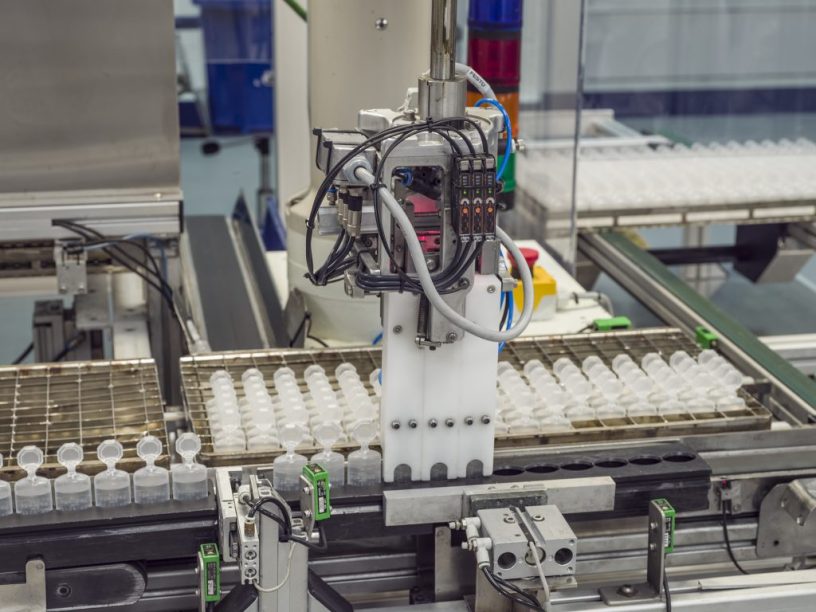
Blow-Fill-Seal, commonly known as BFS, combines container formation, product filling, and sealing within one automated manufacturing sequence. Low-density polyethylene polymer is formed into the required container shape, filled with the pharmaceutical product, and sealed without requiring the container to move through several independent manufacturing environments.
This integrated approach can provide important advantages for sterile products because fewer interventions occur during critical filling operations. Reducing unnecessary human interaction with exposed pharmaceutical products is especially important in aseptic manufacturing, where contamination control is a central concern.
RiteDose specializes in sterile BFS production and describes the technology as a gold-standard option for sterile unit-dose delivery. Its CDMO platform supports pharmaceutical companies through multiple stages of the product lifecycle, including formulation, process development, validation, manufacturing scale-up, and commercial production.
Scalability is an important consideration when selecting a pharmaceutical manufacturing partner. A drug candidate may begin with relatively small development volumes but eventually require millions of commercial doses. Moving between completely different manufacturing platforms during this transition can add complexity, technical risk, and additional validation work.
A CDMO with both development expertise and commercial-scale capacity can help create a more continuous manufacturing strategy. Processes established during earlier development can be designed with future production requirements in mind, reducing the need for unnecessary technology transfers later.
RiteDose operates high-speed BFS filling lines and supports large-volume pharmaceutical production. Its CDMO infrastructure is designed to move programs from early-stage clinical development into commercial manufacturing while maintaining consistent process controls.
Quality systems remain essential throughout this transition. Sterile pharmaceutical manufacturing depends on carefully controlled raw materials, manufacturing environments, analytical testing, microbiology, validation procedures, equipment maintenance, and documentation.
A strong cGMP manufacturing environment brings these elements together. Quality assurance and quality control teams help confirm that manufacturing processes remain within established specifications and that finished products meet appropriate requirements before release.
Container design is another important consideration in BFS manufacturing. The package is not simply something added after the drug has been manufactured. Instead, the container is formed directly within the filling process.
RiteDose currently manufactures low-density polyethylene ampoules designed for sterile liquid medications. Its platform supports fill volumes ranging from approximately 0.2 mL to 15 mL and can serve applications including inhalation, ophthalmic, otic, and oral liquid products.
Customization can also be important when product requirements fall outside a standard format. Container geometry, fill volume, dosage requirements, and administration method may all influence the final manufacturing configuration.
Automated packaging systems further extend the manufacturing process after filling and sealing. High-speed inspection and packaging capabilities can help prepare large commercial volumes for distribution while maintaining production efficiency.
Reliability is equally important. Pharmaceutical manufacturing interruptions can affect more than manufacturing schedules. When medications are part of ongoing patient care, supply disruptions may affect pharmacies, hospitals, providers, and patients.
Manufacturing partners therefore need the capacity and operational systems required to maintain dependable production over long periods. Equipment redundancy, preventive maintenance, qualified personnel, validated processes, and quality oversight all contribute to supply continuity.
RiteDose reports that it has produced billions of doses and operates one of the largest U.S. BFS manufacturing platforms. Its current CDMO capacity exceeds 2.6 billion units annually, demonstrating the scale that may be required for major commercial pharmaceutical programs.
Development support also matters before a product reaches that level. Pharmaceutical companies may need assistance with formulation, analytical methods, process validation, stability work, container development, regulatory documentation, and manufacturing readiness.
Bringing these capabilities together within one CDMO can reduce the number of external handoffs required throughout development. This may create clearer communication between scientific, engineering, quality, regulatory, and manufacturing teams.
For drug developers evaluating a Blow-Fill-Seal CDMO United States partner, manufacturing technology should therefore be only one part of the decision. Development capabilities, aseptic expertise, quality systems, regulatory experience, available capacity, packaging infrastructure, and commercialization support all contribute to the strength of a long-term partnership.
Blow-Fill-Seal manufacturing provides a highly automated approach to sterile unit-dose production that can combine container formation, filling, and sealing in a continuous process. When supported by strong pharmaceutical development capabilities and commercial-scale infrastructure, BFS can provide drug companies with a practical path from early development to reliable patient supply.
As demand for sterile liquid medicines continues across respiratory, ophthalmic, otic, and other therapeutic applications, specialized BFS manufacturing will remain an important part of the pharmaceutical supply chain. Choosing a CDMO with the technology, capacity, quality infrastructure, and experience to support that entire lifecycle can help pharmaceutical companies move promising therapies toward commercial production with greater consistency.

