
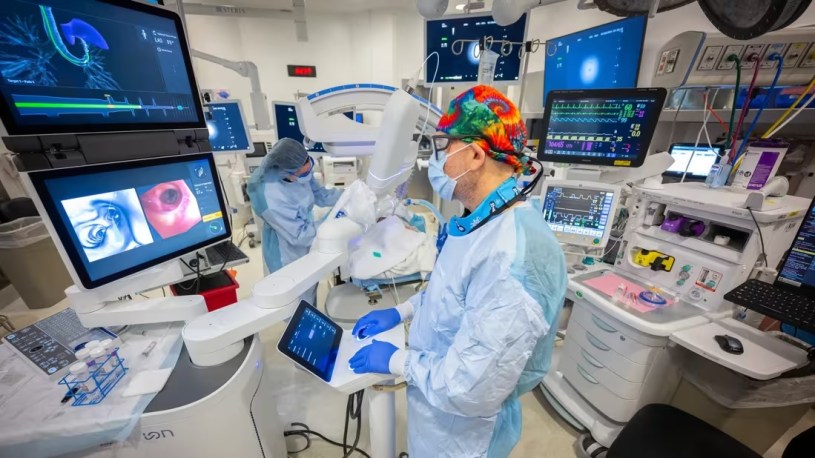
When a physician discovers a lung nodule or abnormal region on an image, the discovery will be followed by identification of the problem which can be very stressful to patients. Thankfully, some of the most recent developments in pulmonary medicine make it possible to get to those tight spots in the lungs. Robotic bronchoscopy is one of those innovations.
If you are seeking a robotic bronchoscopy specialist Glendale, you may want to learn a little more about the procedure and the circumstances under which it may be suggested so you can have a more productive talk with your physician.
What Is Robotic Bronchoscopy?
Robotic bronchoscopy is a minimally invasive procedure that helps physicians reach certain areas of the lungs that can be difficult to access with conventional bronchoscopy.
During the procedure, a physician guides a flexible robotic-assisted scope through the body’s natural airways toward a suspicious lung nodule or other area of concern. Advanced imaging and navigation technology can help the physician plan the route and obtain a tissue sample when a biopsy is needed.
Unlike procedures that require an incision through the chest, robotic bronchoscopy uses the airways as the pathway to the lungs. This can make it a useful option for evaluating certain pulmonary abnormalities.
The exact approach depends on the patient’s imaging, medical history, location of the nodule, and overall health.
When Might a Patient Need Robotic Bronchoscopy?
A lung nodule does not automatically mean cancer. Many nodules are caused by conditions other than cancer, including infections, inflammation, or scar tissue.
However, a physician may recommend additional evaluation when imaging shows a nodule or abnormality that needs a closer look.
Robotic bronchoscopy may be considered when a tissue sample is needed to help determine what is causing the abnormality.
It may be used as part of the evaluation of:
- Lung nodules
- Suspected lung cancer
- Certain pulmonary lesions
- Abnormal findings on CT scans
- Other difficult to reach areas of the lungs
The decision to perform a biopsy should always be based on an individual’s medical situation. A pulmonologist can review imaging and determine which diagnostic approach is most appropriate.
Why Is Robotic Bronchoscopy Useful for Lung Nodules?
Some lung nodules are located deep within the lungs or in areas that can be challenging to reach using traditional techniques.
Robotic navigation systems are designed to help physicians navigate the smaller airways and reach selected areas with greater control.
The ion robotic bronchoscopy system, for example, uses a three dimensional map created from CT imaging to help guide the scope toward targeted areas of the lung.
The goal is to help physicians obtain tissue for diagnosis while avoiding more invasive approaches when appropriate.
That does not mean robotic bronchoscopy is the right procedure for every patient. A specialist needs to consider the size and location of the nodule, imaging characteristics, medical history, and potential risks before recommending it.
What Happens During the Procedure?
Most patients receive anesthesia so they are relaxed and comfortable during the procedure. The physician slowly advances the bronchoscope through the airways toward the site being examined. When the appropriate area is reached, tissue samples may be taken for lab testing.
In some cases, other techniques may be used during the procedure depending on the circumstances.
One advantage is that the physician can often examine parts of the lung that are hard to reach with traditional bronchoscopy. Afterward, patients are observed as the anesthesia wears off, and the care team will tell the patient when to expect results of the biopsy.
Is Robotic Bronchoscopy Minimally Invasive?
Yes. Robotic bronchoscopy is considered a minimally invasive approach because the physician reaches the lungs through the natural airways rather than making an external incision.
However, minimally invasive does not mean risk free.
Potential risks can vary depending on the patient’s health and the specific procedure. Your physician should explain the potential benefits and risks before the procedure and answer questions about recovery.
Patients should also provide their medical team with a complete list of medications, allergies, and relevant medical conditions before undergoing bronchoscopy.
Why Does Experience Matter When Choosing a Specialist?
Interventional pulmonology involves certain procedures that require training and experience.
If you are searching for a robotic bronchoscopy specialist Glendale, you may want to consider a physician with a background in interventional pulmonology, who has experience in evaluating lung nodules and similar other complex lung conditions.
Dr. Ramyar Mahdavi is a board certified interventional pulmonologist, who has extensive experience in interventional pulmonary medicine. Dr. Mahdavi founded and ran the Interventional Pulmonology Program at Keck Hospital of USC and later joined Adventist Health Glendale.
According to Adventist Health Glendale, Dr. Mahdavi performed the hospital’s first robotic bronchoscopy procedure in 2024, and is currently using this technology to aid in difficult-to-access lung diagnosis cases.
What Questions Should You Ask a Robotic Bronchoscopy Specialist?
It is normal to have questions before a procedure involving your lungs. Before moving forward, consider asking:
1. Why do I need a biopsy?
Understanding what your imaging shows and why additional testing is recommended can make the process less confusing.
2. Is robotic bronchoscopy appropriate for my lung nodule?
Not every nodule is best evaluated using the same technique.
3. What are the potential risks?
Ask your physician to explain the risks based on your particular health situation.
4. How will the biopsy results be used?
The tissue sample may help determine whether a nodule is cancerous, infectious, inflammatory, or related to another condition.
5. What should I expect after the procedure?
Ask about recovery, activity restrictions, medications, and when you should expect results.
Having these conversations can help you understand the purpose of the procedure instead of simply focusing on the technology itself.
Why Consider a Local Glendale Specialist?
Having access to advanced pulmonary care close to home can be valuable, especially when diagnostic testing requires follow up appointments.
Dr. Mahdavi practices in Glendale, where Adventist Health lists him as an interventional pulmonology and critical care medicine physician. His listed practice location is 1511 W Glenoaks Blvd. Glendale, CA 91201.
A local specialist can also coordinate with other members of a patient’s care team when additional testing or treatment is needed.
What Should Patients Remember About Robotic Bronchoscopy?
A lung nodule is something that can be concerning, but the presence of a lung nodule does not necessarily mean that you have lung cancer. Diagnostic procedures like bronchoscopy are important for helping physicians figure out what is causing the abnormal finding. Robotic bronchoscopy provides an additional avenue for interventional pulmonologists to access certain parts of the lungs and acquire tissue samples via the native airways.
If you have been diagnosed with a lung nodule, or have been told that something has been seen on your chest imaging, discuss your diagnostic pathway with your physician. If robotic bronchoscopy is being considered, an experienced robotic bronchoscopy specialist Glendale can tell you if it is suitable for your particular circumstance.
The most important thing is to obtain a thorough assessment and to understand why one diagnostic technique is being recommended over another. With the continuous progress in the field of interventional pulmonology, patients have more modern choices in evaluating even difficult-to-access lung findings.

